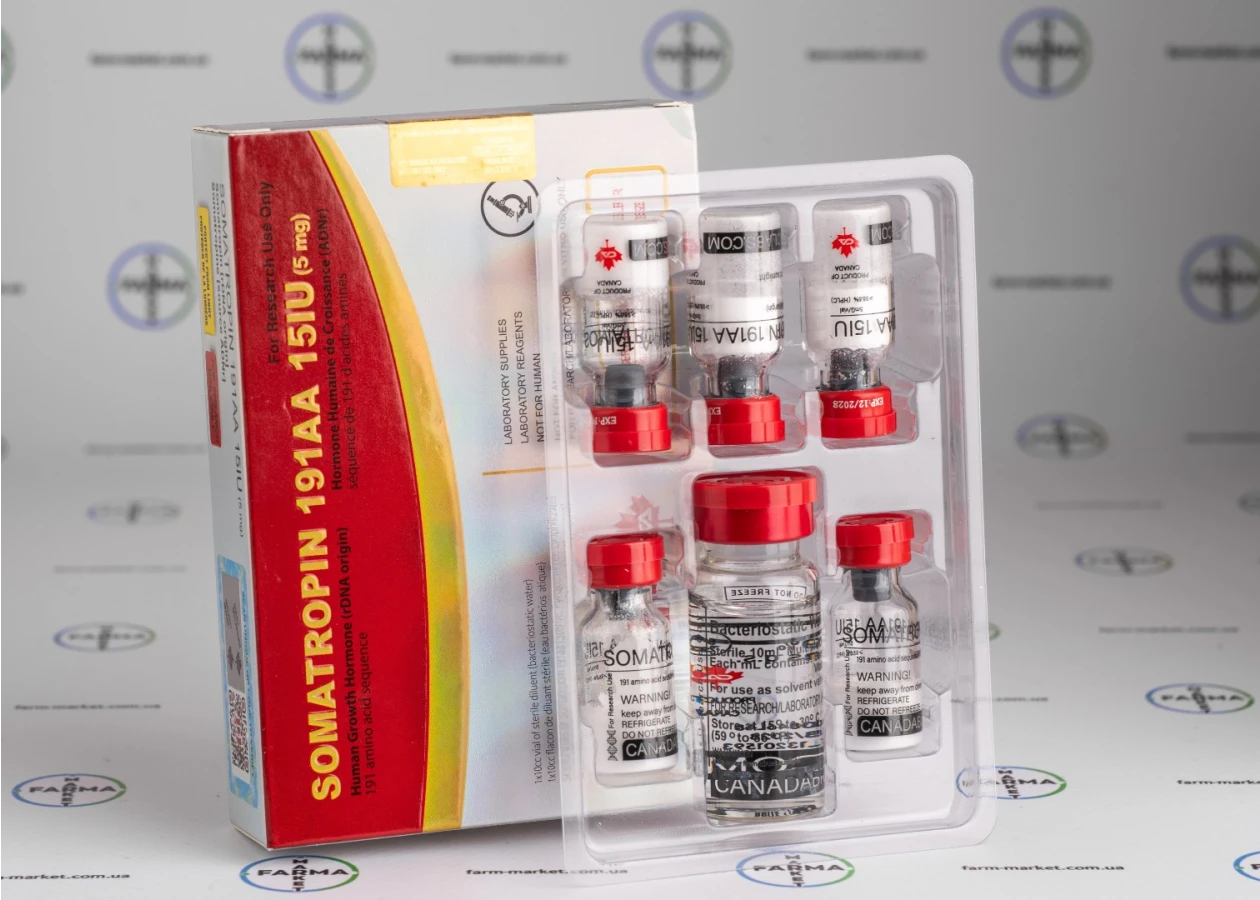
# Somatropin 191AA 150 IU Kit: Insights into Recombinant Growth Hormone
Recombinant growth hormone has played a significant role in scientific research for several decades. Among the available formulations, Somatropin 191AA is recognized for having the same amino acid sequence as naturally produced human growth hormone. This structural similarity has made it a valuable subject for studies focused on endocrine regulation, cellular growth, and metabolic function.
**A Recombinant Version of Human Growth Hormone**
Somatropin 191AA is produced using recombinant DNA technology, allowing scientists to create a highly purified form of human growth hormone. The "191AA" designation indicates that the molecule contains 191 amino acids, matching the natural hormone synthesized by the anterior pituitary gland.
Because of this identical structure, researchers use Somatropin to investigate normal biological processes associated with growth hormone activity.
**Growth Hormone and Biological Regulation**
Human growth hormone serves as a signaling molecule that helps coordinate numerous physiological functions. It participates in communication between organs and tissues, influencing processes related to growth, metabolism, and cellular maintenance.
Research has shown that growth hormone contributes to several important biological activities, including:
* Supporting protein metabolism
* Regulating lipid utilization
* Promoting normal bone remodeling
* Influencing muscle tissue physiology
* Stimulating the production of insulin-like growth factor-1 (IGF-1)
* Assisting cellular repair mechanisms
These functions continue to be explored in laboratory settings to better understand hormonal regulation.
**Research Applications**
Scientists use Somatropin 191AA in a variety of experimental models to study endocrine pathways and hormone signaling. Research often focuses on how growth hormone affects different tissues under normal physiological conditions and how it interacts with other hormones involved in metabolism.
These investigations contribute to expanding knowledge of human biology and the complex networks that maintain internal balance.
**Manufacturing and Quality Standards**
Producing recombinant proteins requires advanced biotechnology and strict quality control procedures. Each stage of manufacturing is designed to ensure consistency, purity, and structural accuracy.
Analytical testing typically verifies:
* Amino acid sequence
* Product purity
* Biological integrity
* Batch consistency
* Manufacturing quality
These measures help provide reliable materials for scientific investigation.
**Preparation and Storage**
Somatropin is commonly supplied in a lyophilized form, which improves long-term stability before laboratory preparation. Researchers follow standardized reconstitution procedures and appropriate storage recommendations to maintain the protein's structural integrity throughout experimental use.
Proper handling is considered an essential part of maintaining consistent laboratory conditions.
**The Importance of Ongoing Research**
Interest in recombinant growth hormone continues because of its broad influence on physiological systems. Researchers are studying how growth hormone participates in cellular communication, tissue renewal, energy metabolism, and adaptation to physical demands.
Modern laboratory techniques allow scientists to examine these processes in greater detail than ever before, leading to a deeper understanding of endocrine biology.
**Looking Toward Future Discoveries**
As biomedical research https://www.ecbt.org/product/somatropin-191aa-150-iu-kit-usa-domestic/ continues to evolve, Somatropin 191AA remains an important tool for investigating growth hormone physiology. Future studies are expected to provide additional insight into hormonal signaling pathways, interactions with IGF-1, and the mechanisms that help regulate normal cellular function.
Continued research in this field contributes to a growing understanding of how growth hormone supports complex biological systems and maintains physiological balance.